
October 22, 2026
"Water usage must be restricted to essential needs only, such as drinking, cooking, and personal hygiene purposes, in order to maintain water storage in tanks for all water customers while DWS repairs its wells." That line comes from the Hawaiʻi County Department of Water Supply's October 5, 2026 notice. It covers every DWS customer in Kawaihae, Kawaihae Harbor, Hāpuna Beach Resort, Mauna Kea Beach Resort, Puakō and Mauna Lani Resort.
Waimea town isn't on that list. The Kamuela address covers both the cool ranchlands and the sunlit resort coast, but the county serves them through two separate water systems, and each one fails in its own way. On the coast the trouble is wells, pumps and power. In town it's rain. If you're comparing a home at Mauna Lani with one in Puʻukapu, that difference affects how a property actually lives, and it never shows up in a listing.
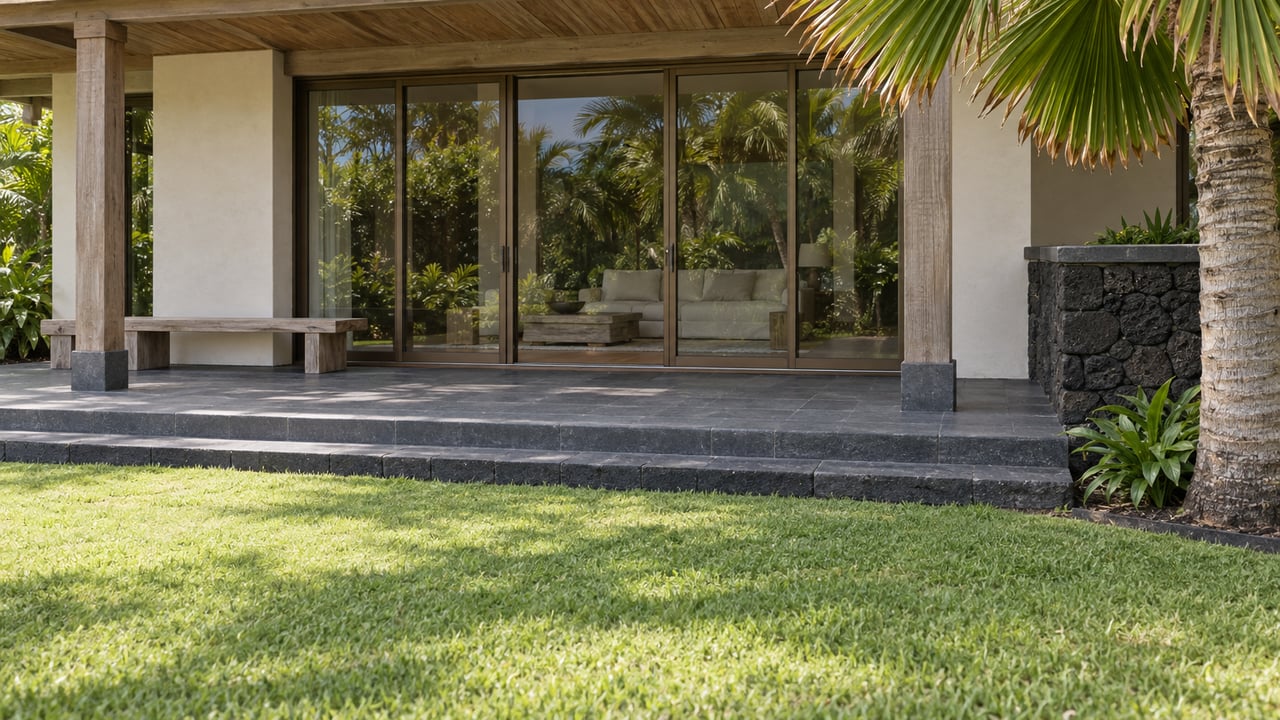
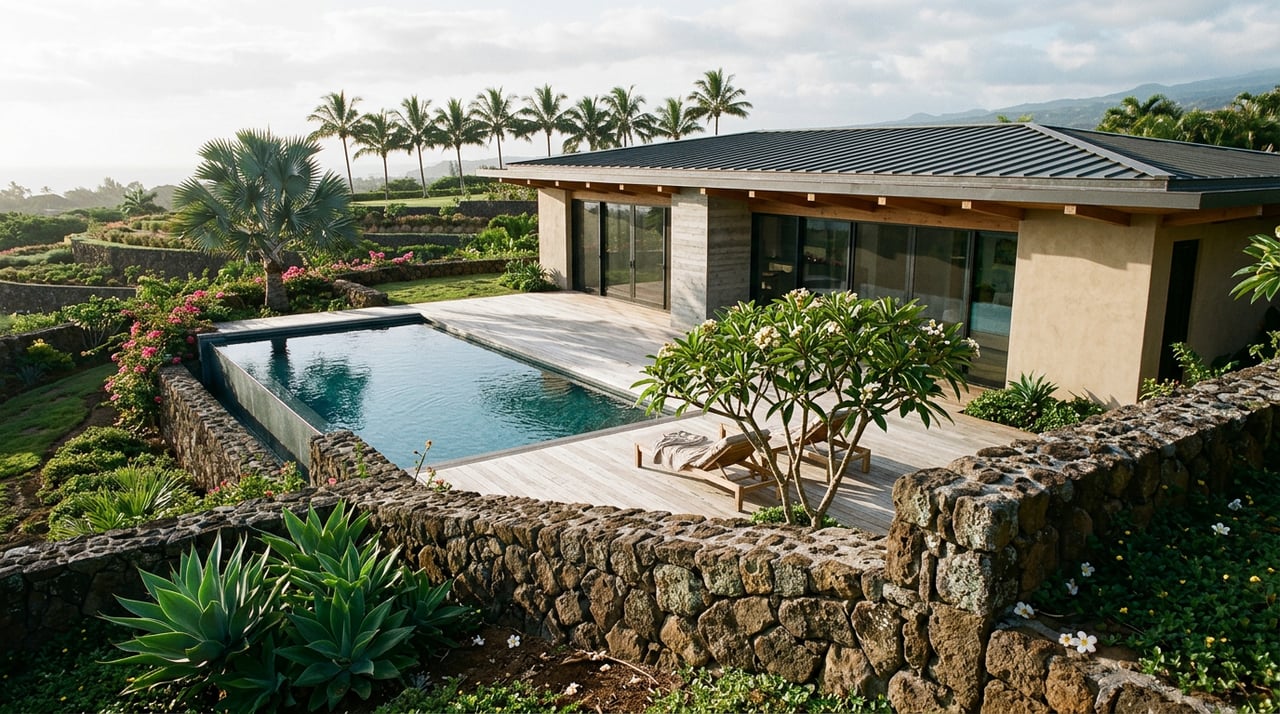
On the coast, a home's appeal usually rests on things that need water. There's the lawn running down toward the lava, the planted lanai, the pool, and the irrigated common grounds an association maintains. The October 5 notice asks customers to stop or postpone exactly those uses: "Irrigation and lawn watering," "Filling swimming pools or spas," pressure washing, and washing vehicles or boats. It stays in effect "until water system conditions improve," and DWS says it will tell customers when normal use can resume.
The step before essential-use-only puts an extra burden on irrigation. DWS's October 2 restriction asked coastal customers to cut use by at least 25 percent and irrigation customers by at least 50 percent, citing "ongoing repairs of DWS' wells." On this side of Kamuela, the landscaping that makes a resort-area home feel finished is the first use the county asks to give up when the wells struggle. Lately, the wells have struggled often.
Here is the run of DWS notices for the coastal Lālāmilo customers, in order:
Read as a whole, the list shows a pattern. Every notice ties back to equipment, wells or electricity. None mentions drought.
The coastal Lālāmilo system runs on groundwater. DWS's 2025 Consumer Confidence Report for Lālāmilo lists eight sources: Lālāmilo Wells A through D and Parker Wells 1 through 4. The county's water use plan for the area describes the system as serving Kawaihae through Mauna Lani across five operational zones, with two booster stations and nine storage tanks. The same plan notes that overpumping nearby brackish wells could affect the salinity of potable groundwater. A well field like this can't simply be pushed harder when one well goes down.
The equipment has a repair history. A September 2018 Water Board agenda shows Lālāmilo D, installed in April 1990, needing another deepwell repair after earlier ones in November 1996, April 1998, August 2004 and February 2016.
Groundwater also depends on electricity. After Hurricane Lala in August, Hawaiʻi Public Radio explained that DWS relies on power to pump water up from aquifers into its tanks, and it quoted DWS Chief Engineer Keith Okamoto:
"We do have backup generators, but we don't have enough to replicate HELCO's entire power distribution."
The department is investing. Its financial statements for the fiscal year ending June 30, 2025 list $0.5 million in capital additions for "Hardening of Parker No. 2, Wai'aha and Lalamilo B Wells" and $6.0 million for the Puakō Waterline Replacement. Even so, the September 28 cancellation notice ends with DWS saying it "continues to strive to improve its operational resiliency and redundancy." For the coast, that is still a goal the department is working toward.
Up the hill, the Waimea system runs mostly on rain. DWS's Kohala water plan describes dam diversions from the Waikoloa and Kohākōhau streams, with an estimated surface-water capacity of 1.45 million gallons per day. The Waimea Well adds to that supply. So the town's notices follow the weather.
In April 2025, Big Island Now reported a Waimea-area conservation notice driven by a prolonged lack of rain along with problems at the Waimea well. On February 4, 2026, DWS issued a restriction for the area, citing prolonged lack of rainfall and dry conditions. Then on April 7, DWS downgraded it to a conservation notice asking for at least a 10 percent cut, because "recent rains have filled the DWS' Waikoloa Reservoirs to a satisfactory level," even with the Waimea Well under repair and offline.
That April notice also spells out the town system's reach: Āhualoa to Waiemi subdivision, including Honokaia, Puʻukapu, Nienie, Waimea town, the Lālāmilo farm lots, portions of Mana Road and Māmalahoa Highway, Anekona Estates and Kānehoa subdivision. The Lālāmilo farm lots are on that list because they draw from the Waimea system. The coastal system that DWS also calls "Lālāmilo" is a separate system and doesn't serve the farm lots.
When this was written in mid-October, the DWS notices page still listed the Waimea conservation notice. The Waimea Community Association describes the rest of Waimea as under a "water restriction," so check the county's page for the current level. The two systems also have a valved interconnection that lets DWS move water between them. They are distinct systems, but they aren't completely isolated from each other.
For a buyer, the two failure modes lead to different questions. A Waimea town property is exposed to dry spells, which tend to come with some warning and ease when rain refills the reservoirs. A coastal property is exposed to mechanical and electrical events, and those can begin and end within days. Late September showed this: one notice was cancelled on the 28th, and a new one arrived on October 2.
On the coast, a few questions are worth putting to an association or a seller before you fall for a lawn:
In town, the better questions concern the seasons and how a property came through the dry stretch that led to the February restriction.
The answers to the HOA questions come from that association's own documents and board, and this article is general information, not legal or financial advice. Confirm the details of any specific property with the association and the appropriate professionals. Before you visit or write an offer, check DWS's Public Notices Map, which shows any notice by area.
Is Waimea town under the coastal essential-use notice? No. The October 5 notice names only Kawaihae, Kawaihae Harbor, Hāpuna Beach Resort, Mauna Kea Beach Resort, Puakō and Mauna Lani Resort.
Is the October notice still in effect? It was in effect as of mid-October, and DWS said it would notify customers when normal use could resume. Check hawaiidws.org or call 808-961-8790 for the current status.
Does an essential-use notice mean the taps go dry? No. The notice keeps drinking, cooking, food preparation, sanitation and personal hygiene as essential uses, and it exists to keep water in the tanks for all customers.
If you're weighing a Kohala Coast lanai against an upcountry Waimea pasture, ʻĀina Luxury Realty can help you ask the water questions early, before a lawn or a pool becomes part of the price. Marc and Natalie are glad to walk through the notice history for any property you're considering.
Stay up to date on the latest real estate trends.
At ʻĀina Luxury Realty, we offer personalized service and unmatched island expertise. Reach out today, and let’s make your Big Island real estate goals a reality. Thank you and Mahalo