

August 6, 2026
Two dates changed what a South Kona listing packet has to say this summer. The first was March 10 through 24, when the Kona Low storms drew a Presidential Major Disaster Declaration for Hawaiʻi County. The second was May 22 at 9:46 p.m., when a magnitude 6.0 earthquake struck near Hōnaunau-Nāpōʻopoʻo at a depth of about 14 miles, on the doorstep of every home between Captain Cook and Nāpōʻopoʻo Road. The Seller's Real Property Disclosure Statement your neighbor filled out in February is not the document a buyer will accept in August.
The mechanic most owners are missing is not the disclosure form itself. It is that the questions on that form now have specific, dated answers, and the buyer's inspector already knows what to look for. A listing that treats the last ninety days as unremarkable reads, to any experienced West Hawaiʻi buyer's agent, like a listing hiding something.
For the March storms, the Kealakekua Public Library at 81-6619 Hawaiʻi Belt Road served as a FEMA and SBA Local Recovery Center through June 12, 2026, with a June 14 application deadline for Individual Assistance and physical-damage disaster loans. If your property received any federal or SBA money, or if you filed and were denied, that paper trail is now part of the property's history a buyer's counsel may reasonably request.
For the earthquake, the numbers are more concentrated. Hawaiʻi County Civil Defense received more than 200 damage reports, of which eight homes were considered destroyed and another 85 were listed as sustaining major damage, per the county's May 27 emergency proclamation. The concentration matters: the epicenter sat roughly seven miles south of Hōnaunau-Nāpōʻopoʻo at fourteen miles depth, with maximum Modified Mercalli intensity of VII (very strong shaking) and more than 2,662 felt reports in the first hour. Homes in Kealakekua, Captain Cook, and the Nāpōʻopoʻo Road corridor sat inside the reddest ring on the shake map.
Hawaiʻi's disclosure regime is governed by HRS Chapter 508D. The seller's obligation is narrower than most owners assume and broader than most owners hope. Under Nolo's summary of § 508D-4 and § 508D-5, no one may sell residential real property without providing the buyer a property disclosure statement signed and dated within the six months before, or ten calendar days after, accepting the purchase offer. The form asks for "material facts," which the statute defines as any fact, defect, or condition that would measurably affect value to a reasonable buyer.
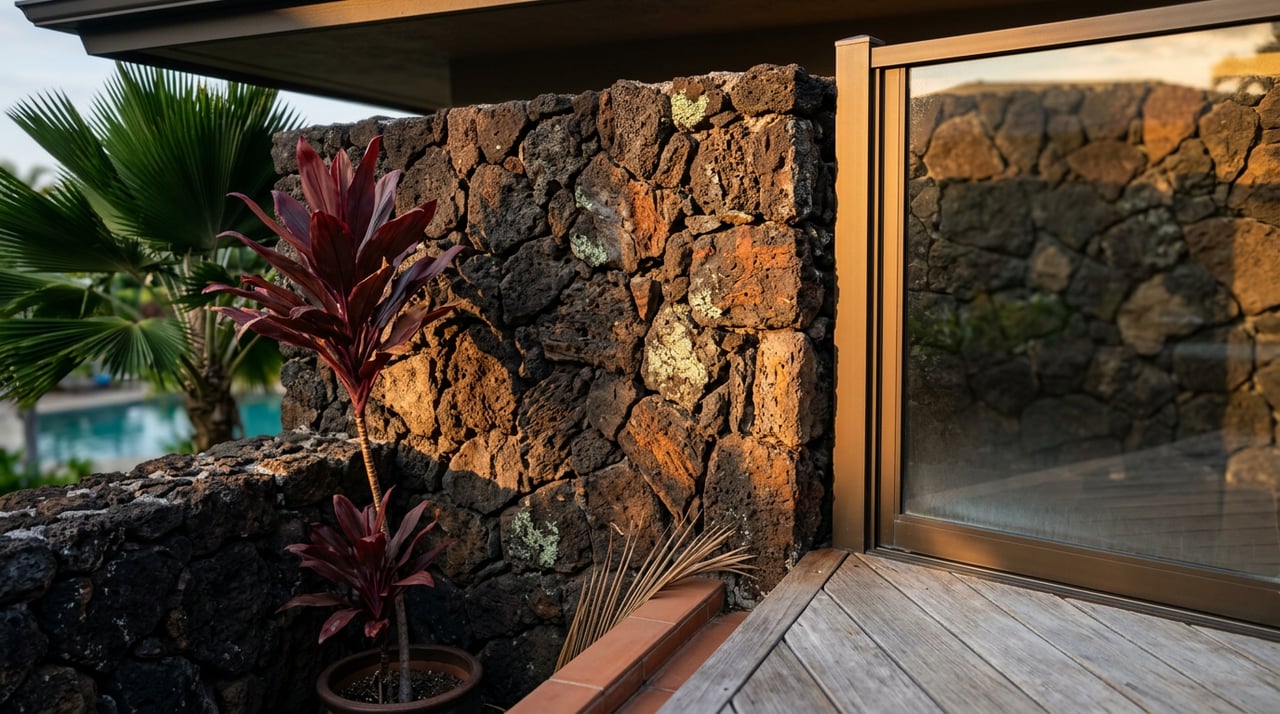
A May 22 event that shifted a house on its piers is a material fact. A repaired drywall crack is a material fact. A water catchment liner that split at the seam and was replaced in June is a material fact. So is a rock wall that came down in the side yard and was rebuilt, permitted or not.
The disclosure question is no longer "did anything happen?" It is "what happened, what did you do about it, and can you show the receipts?"
Once the SRPDS is delivered, Hawaiʻi law grants the buyer a fifteen-calendar-day rescission window. The Hawaiʻi Association of Realtors standard form states plainly that unless otherwise agreed in the purchase contract, buyer shall have fifteen calendar days from the date of receiving the disclosure statement to examine it and to rescind the purchase contract, with such rescission made in writing to seller directly or seller's agent. All deposits return to the buyer if that notice comes in on time.
The mechanic sellers overlook: an incomplete SRPDS delivered late in escrow effectively hands the buyer a fresh fifteen days to walk with no penalty, right when interest-rate locks are expiring and moving trucks are booked. A complete, dated, evidence-backed SRPDS delivered at listing shortens that leverage window to zero by the time the offer arrives.
Standard Hawaiʻi homeowners policies do not cover earthquake damage. That has always been true, but it was academic for most South Kona owners until May 23. It is not academic anymore.
Two facts are worth setting side by side. First, per Island Insurance, standard homeowners insurance does not cover flood, hurricane (74+ mph winds), or earthquake damage, and earthquake insurance is optional but comes with high deductibles, usually 10 to 25% of your home's value. Second, per industry data cited by InsuredBetter, despite the fact that Hawaii is considered a high-risk state for earthquake damage, fewer than 12 percent of home and business owners carry earthquake insurance.
The buyer sitting across the table from you almost certainly knows this. Their lender may also know it. Post-May 22, insurance carriers routinely tighten new-policy issuance in shaken zones for a period following a major event, which means the buyer's ability to bind coverage on your specific property may be temporarily narrower than it was in April.
What that produces in practice is a negotiation that pivots on repair documentation rather than list price. Buyers ask for engineer's letters on the foundation. Lenders ask for photos of the water catchment tank. The seller who has already commissioned a structural walk-through and stapled the invoice to the disclosure closes. The seller who has not is renegotiating in week three.
A useful footnote from the state Insurance Division's earthquake guidance: while earthquake coverage is not included in commercial and homeowners' policies, some relief for earthquake-related losses may be available under a homeowner's policy for ensuing glass breakage, theft, fire, and food spoilage. If you filed a small claim in late May for a broken window or a spoiled refrigerator, that claim history is now in the CLUE report a buyer's insurer will pull.
The physical damage pattern in South Kona was specific and repetitive. Reporting from the days after the quake documented it clearly. Some neighbors lost water tanks or liners, someone nearby had a house nearly walk off its pier foundation, and homes suffered drywall cracks and gashes from furniture rocking back and forth. County Civil Defense also noted rock slides on portions of Highway 11 and Nāpōʻopoʻo Road, structures shifting on their foundation, and other property damage.
Inspectors know the list. Expect a South Kona buyer's inspection this summer to spend time on:
None of these are surprises. The surprise, for a seller who has not walked the property with an eye toward them, is how quickly a buyer's inspector converts each finding into a price adjustment request.
If you registered for FEMA Individual Assistance or an SBA disaster loan after the March storms, that registration is tied to your property address. The Hawaiʻi Tribune-Herald reported that FEMA disbursed roughly $2M in individual assistance across Hawaiʻi County for Kona Low damage, with the Kealakekua LRC open through June 12. A savvy buyer's counsel may ask whether your property was inspected, what the FEMA determination was, and whether repair funds were used as intended. None of that is disqualifying. Concealing it is.
The May 22 earthquake did not, at the time of writing, produce its own Presidential Major Disaster Declaration. The Joint Preliminary Damage Assessment announced June 17, 2026 is the step that would precede one. Owners with earthquake damage should track that process, because a later declaration would open Individual Assistance retroactively and create a second layer of documentation buyers will ask about.
Yes. The SRPDS asks about past defects, repairs, and replacements, not only current conditions. A repaired drywall crack from a May 22 event is a repaired crack from a May 22 event, and the form has a line for it.
No. Certain narrow categories of sellers are exempt under § 508D-3 (estates in probate, some foreclosure transfers), but a typical owner-occupant sale cannot contract around the SRPDS. Selling "as-is" limits repair obligations, not disclosure obligations.
For any single-family home in the South Kona shake zone this summer, the honest answer is that a pre-listing structural walkthrough by a licensed engineer, with a written letter, is one of the highest-leverage $500 to $1,500 you can spend. It sets the ceiling on buyer repair credits before negotiation opens.
No. Coverage does not follow the property. The buyer must bind their own policy, and their ability to do so in the immediate aftermath of a significant event can be narrower than usual. Give buyers a head start by disclosing the property's insurance history early.
The USGS reported that several aftershocks had already occurred and that aftershocks may continue in the coming days and weeks. Any new observable damage from an aftershock during your listing period is a new material fact that updates the disclosure.
Selling a South Kona home this summer is a fully doable transaction. It is not the same transaction it was in April. Owners who treat the SRPDS as the first document rather than the last, who walk their property with a structural eye, and who stack the paper before an offer arrives are the ones closing on terms they set. Owners who leave the packet thin are the ones renegotiating on terms the buyer sets.
If you are weighing a sale in Kealakekua, Captain Cook, Hōnaunau, or the Nāpōʻopoʻo Road corridor and want a calm walk-through of what your specific packet should contain before it goes to market, ʻĀina Luxury Realty is here to help you prepare with the care this place deserves.
Stay up to date on the latest real estate trends.







At ʻĀina Luxury Realty, we offer personalized service and unmatched island expertise. Reach out today, and let’s make your Big Island real estate goals a reality. Thank you and Mahalo