
August 27, 2026
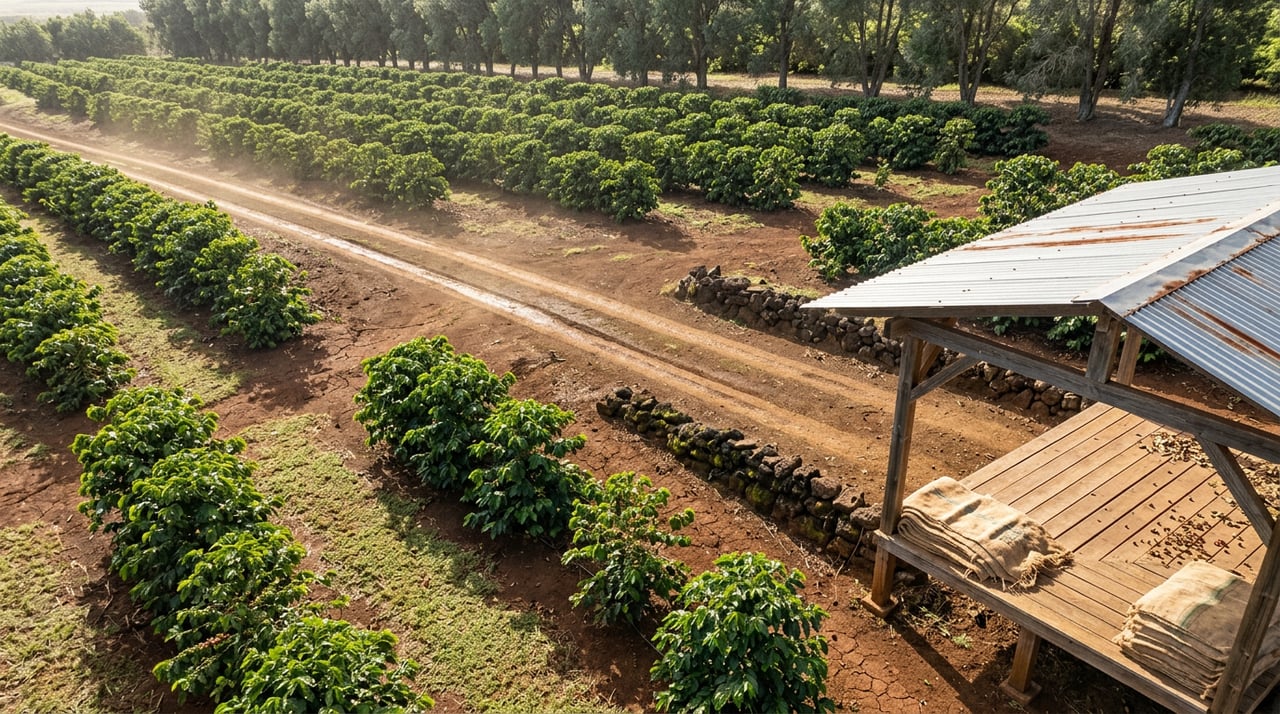
Buyers who put an offer on a working coffee farm above Holualoa town almost always notice the same line on the listing sheet: "Ag Dedicated." It reads like an amenity, something like a metal roof or a producing well. Most buyers treat it that way right up until their title company sends over the preliminary report.
That distinction is the whole story. The tax break attached to a Holualoa coffee farm is not something you inherit the way you inherit a view or a driveway. Under Hawai'i County Code § 19-60, it is a condition running with the land, and what you do with the coffee trees after closing determines whether you keep it, pay it back, or lose it before you ever move in. Right now, that question has a deadline attached to it.
According to Hawai'i County's Real Property Tax Office, land with an active agricultural dedication gets assessed on what it actually produces.
The gap can help keep coffee, orchard, and diversified farms viable on land that would otherwise price out working growers. The discount depends on continuous, demonstrable agricultural use, documented income from the crop, and, in the case of a long-term dedication, a filing recorded against the property itself.
That last part is what catches buyers off guard.
A 10-year dedication is not a private arrangement between the county and whoever happens to own the parcel that year. It is recorded at the Bureau of Conveyances, A buyer who doesn't intend to keep the coffee trees in active production, whether the plan is to build a single residence, let the orchard go fallow, or convert the acreage to something else entirely, can trigger a rollback: back taxes calculated as if the dedication had never been in place.
This is not a rare footnote. It is the mechanism the whole program depends on. The tax rate was never priced for the buyer's intentions. It was priced for the seller's ongoing farm operation, and rollback exposure is built into the recording.
For a Holualoa buyer, that means the real question during due diligence isn't "does this farm have a dedication." It's "what happens to that dedication the day I close, and am I the kind of owner the county's assessment was actually written for."
There's a second layer of urgency specific to this exact window. Aloha State Daily reports that Hawai'i County's nondedicated agricultural program, the older and looser of the county's ag assessment tracks, closes to further applications on September 1, 2026. Most owners currently holding that status have to move into either a 3-year or 10-year dedicated program to keep agricultural tax treatment, subject to the narrow exception for qualifying owner-occupied homes described below.
The stakes of missing that window are not abstract. County Councilwoman Heather Kimball, who co-introduced the relief measure addressing this transition, described the gap between agricultural and market-value assessment as steep enough to produce what she called a fiscal cliff, telling the outlet that landowners losing agricultural status can see an increase of up to 700% in a single year, translating to roughly $1,300 to $1,500 more annually for many affected owners.
The county council did pass a narrow fix in January 2026, Bill 103, sponsored by Kimball and Councilman James Hustace, which lets qualifying owner-occupied homes keep their last agricultural land value if they held ag-rate assessment for at least 10 of the past 15 years and qualify for the senior homeowner exemption. It's real relief, but it's also narrow by design. It does not apply to a newly purchased second home, an investment parcel. It expires at the end of 2029. If you're buying into the coffee belt this fall rather than having farmed it for a decade, Bill 103 doesn't reach you.
The Kona Coffee Farmers Association has been walking its own members through the September 1 filing window, reminding growers that most active coffee or diversified farms will likely qualify for the 10-year dedication as an orchard, provided they can document last year's state excise tax filing or a Schedule F showing farm income. That detail matters for anyone buying a farm mid-transition: ask whether the seller has already filed, and if not, whether the closing timeline allows for it before the door shuts.
If you're selling a coffee farm in the Holualoa belt, the September 1 deadline is worth acting on before you list, not after an offer comes in. A parcel already filed into the 3-year or 10-year dedication is a cleaner, more predictable asset for a buyer to underwrite than one sitting in a nondedicated status that's about to expire with no path forward.
If you're buying, the due diligence list should include a direct call to the county's Real Property Tax Division to confirm the parcel's current dedication status, the term remaining, and whether the required annual gross income documentation has been current. Ask your escrow team to flag the dedication recording specifically on the preliminary title report rather than treating it as boilerplate. And be honest with yourself about whether you intend to farm, lease the operation to someone who will, or let the land shift to residential use, because that decision determines whether the number on the listing sheet is a benefit you keep or a bill that arrives later.
Does the ag dedication transfer automatically when I buy a Holualoa coffee farm? Keeping the tax benefit requires continuing the agricultural use it was based on. It's not a status that simply follows the deed regardless of what you do with the land.
What happens if I buy the farm but don't want to keep farming it? You risk a rollback assessment, meaning the county can bill back taxes calculated as though the dedication had never applied. This is the mechanism that keeps the discount tied to actual working farms rather than to whoever holds title.
Coffee land in Holualoa carries real weight, tied to generations of growers and to a landscape shaped by agricultural production. Understanding what the ag dedication actually requires, before you write an offer or sign a listing agreement, is part of respecting that. If you're weighing a coffee farm purchase or preparing to sell one before the county's filing window closes, ʻĀina Luxury Realty can walk through the specific parcel with you and the numbers behind it.
This article is general information, not legal, tax or financial advice. Consult a qualified professional about your situation.
Stay up to date on the latest real estate trends.
At ʻĀina Luxury Realty, we offer personalized service and unmatched island expertise. Reach out today, and let’s make your Big Island real estate goals a reality. Thank you and Mahalo